

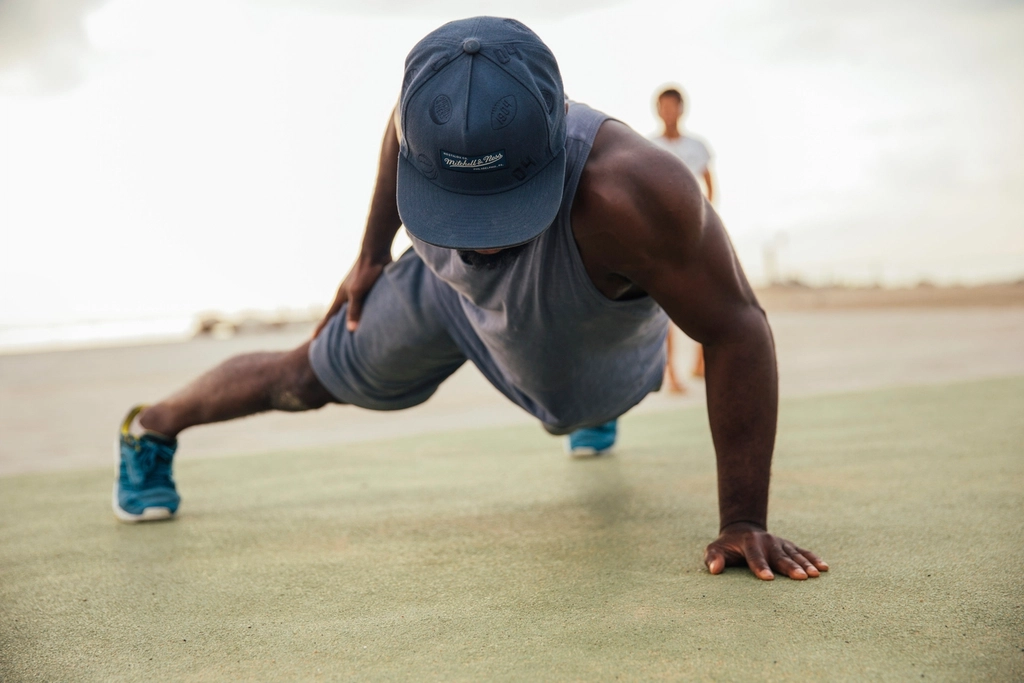
Calisthenics is strength training using your own bodyweight as resistance — no gym membership, no expensive machines, just you and gravity. It is one of the most accessible, scalable, and sustainable ways to build real functional strength, and it can be started almost anywhere, at any age.
What Is Calisthenics?
The word calisthenics comes from the Greek roots kalos (beauty) and sthenos (strength). In practice it means training your muscles by moving your own body through space rather than lifting external weights. Pushups, squats, pull-ups, lunges, dips, and planks are all classic calisthenics movements. Because you control the resistance through leverage and body position, the same exercise can be made dramatically easier or harder without buying anything new.
This adaptability is what makes calisthenics so beginner-friendly. A complete newcomer can start with wall pushups, while an advanced athlete might work toward a one-arm pushup — the same fundamental pattern, scaled across years of progress. You are never locked out by equipment; you simply adjust the angle, range, or leverage.
Why Choose Calisthenics as a Beginner
There are several reasons calisthenics is an excellent entry point into fitness. It teaches you to control and coordinate your entire body, which builds strength that transfers directly to everyday life — carrying groceries, climbing stairs, playing with children, or moving furniture.
- Minimal cost: The floor, a wall, and eventually a bar are all you truly need.
- Convenience: You can train at home, in a park, or in a hotel room while travelling.
- Joint-friendly: Bodyweight movements tend to load joints in natural ranges, and you control the intensity precisely.
- Balanced development: Compound movements work many muscles at once, encouraging proportional strength rather than isolated bulk.
- Body awareness: You learn how your body moves, which improves posture, balance, and coordination over time.
Perhaps most importantly, calisthenics scales with you for life. The skills build on one another, so motivation stays high as you unlock new movements you once thought impossible.
The Foundational Movements
Almost every calisthenics routine is built from a handful of movement patterns. Master these and you have a lifetime of training material. Think in terms of patterns rather than individual exercises, because each pattern has dozens of variations.
Push
The pushup is the cornerstone. It trains the chest, shoulders, and triceps while demanding core stability. Beginners can start with incline pushups — hands elevated on a sturdy table or wall — and gradually lower the surface until they can perform pushups from the floor.
Pull
Pulling movements train the back and biceps, and they are the pattern most beginners find hardest because they cannot cheat with momentum. Rows performed under a sturdy table, or with a bar set at waist height, build the strength that eventually leads to a full pull-up.
Squat
The bodyweight squat develops the quadriceps, hamstrings, and glutes, and it reinforces the hip-hinge and knee-bend patterns you use constantly. Focus on sitting back, keeping your heels planted, and lowering until your thighs are roughly parallel to the floor.
Core and Hold
The plank and its variations teach your midsection to brace and transfer force. A strong, stable core underpins every other movement, protecting your spine and improving your control on harder skills later.
A Simple Beginner Routine
You do not need a complicated program to start. Consistency beats complexity every time. A well-rounded full-body session performed two or three times a week, with rest days in between, is ideal for beginners. Here is a straightforward template you can follow.
- Warm up for five to ten minutes with light movement: arm circles, bodyweight squats, marching in place, and gentle mobility drills.
- Incline or knee pushups — aim for two or three sets of as many clean reps as you can comfortably manage, stopping a couple of reps short of failure.
- Bodyweight squats — two or three sets, focusing on smooth control and full range of motion.
- Inverted rows or table rows — two or three sets to build pulling strength.
- Plank holds — two or three sets, holding for as long as your form stays solid.
- Cool down with light stretching for the muscles you trained.
Rest around one to two minutes between sets. As the movements get easier, add a repetition here or a harder variation there. This gradual increase is the engine of your progress.
Progressive Overload Without Weights
Muscles grow stronger when you regularly ask them to do slightly more than they are used to. With weights, you simply add more kilograms. In calisthenics you achieve the same effect through several clever methods that let you keep challenging your body indefinitely.
- More repetitions: Adding reps to a set increases the total work performed.
- Harder leverage: Moving from incline pushups toward flat, then decline pushups raises the difficulty by changing the angle.
- Slower tempo: Lowering yourself over three or four seconds increases time under tension and makes any movement more demanding.
- Reduced support: Progressing from two-leg to single-leg squats, or from assisted to unassisted pull-ups, removes help gradually.
- Shorter rest: Trimming rest periods increases the metabolic challenge of a workout.
You do not need all of these at once. Pick one variable, nudge it slightly each week or two, and let the adaptations accumulate. Patience here pays enormous dividends.
Common Mistakes to Avoid
Beginners tend to stumble on a predictable set of errors. Knowing them in advance keeps your progress smooth and your body healthy.
- Sacrificing form for reps: Ten sloppy pushups build less strength — and more injury risk — than five clean ones. Quality always comes first.
- Skipping the pull: Many newcomers happily do pushups but avoid rows and pull-ups because they are harder. This creates muscular imbalances. Train pulling with equal dedication.
- Doing too much too soon: Enthusiasm is wonderful, but daily maximal effort leads to burnout and soreness. Respect your rest days.
- Neglecting legs: It is tempting to focus on the upper body you see in the mirror, but strong legs and hips support everything else.
- Impatience with progressions: Rushing to advanced skills before building a base often leads to frustration and setbacks. Trust the process.
Consistency over months, not intensity over days, is what separates those who build lasting strength from those who quit.
Nutrition, Rest, and Recovery
Training is only the stimulus; your body actually rebuilds itself during rest. Treating recovery as part of the program, not an afterthought, dramatically improves your results.
Aim to eat a balanced diet with adequate protein to support muscle repair, plenty of vegetables and fruit for micronutrients, and enough overall energy to fuel your sessions. Stay well hydrated, especially around workouts. Prioritise sleep, since the deep, restorative stages of sleep are when much of your physical recovery happens.
Give each muscle group roughly a day or two to recover before training it hard again. Gentle movement on off days — walking, easy mobility work, or light stretching — can actually aid recovery by promoting circulation without adding stress.
Warming Up and Building Mobility
A proper warm-up is not optional busywork — it prepares your nervous system, lubricates your joints, and raises your muscle temperature so you move better and reduce injury risk. Spend at least five minutes gradually increasing your heart rate before any real effort. Light jogging in place, jumping jacks, or brisk marching all work well.
Follow general warming with movement-specific preparation. If your session includes pushups, add a few slow arm circles and gentle scapular movements. Before squats, perform a set of shallow, controlled bodyweight squats to groove the pattern. This rehearsal primes exactly the muscles and ranges you are about to challenge.
Mobility deserves ongoing attention because calisthenics rewards those who can move freely through full ranges of motion. Tight hips, stiff shoulders, or a rigid spine will quietly limit your progress on nearly every movement. Dedicate a little time each week to gentle stretching and controlled joint rotations. Over months, improved mobility unlocks deeper squats, stronger overhead positions, and cleaner pulling mechanics — and it keeps you training comfortably for years rather than months.
Building Toward Impressive Skills
One of the great joys of calisthenics is that basic strength eventually opens the door to eye-catching skills like the pull-up, the pistol squat, the dip, and further down the road, movements such as the muscle-up or handstand. These are not reserved for gifted athletes; they are simply the far end of the same progressions you begin as a novice.
The path to any skill follows a reliable pattern. First you build the raw strength through easier variations. Then you practise the specific movement frequently, in small, high-quality doses, when you are fresh rather than exhausted. Skill work responds better to regular, focused practice than to grinding repetitions in a fatigued state.
Resist the urge to skip steps. Attempting an advanced skill before your body is ready usually leads to frustration, poor form, and sometimes injury. Instead, treat each progression as a rung on a ladder. Celebrate mastering each rung, and the impressive skills will arrive in their own time — earned, stable, and genuinely yours.
Staying Motivated and Tracking Progress
Motivation naturally rises and falls, so build systems that keep you going when enthusiasm dips. The single most powerful tool is a simple training log. Writing down what you did each session turns vague effort into visible progress, and seeing your numbers climb is deeply motivating.
Set process goals you fully control, such as showing up three times a week, rather than only outcome goals like a specific physique. Celebrate small wins — your first full pushup, your first unassisted pull-up, an extra ten seconds on a plank. These milestones are the real markers of a body getting stronger.
Finding a training partner or an online community can add accountability and make the journey more enjoyable. On days you truly do not feel like training, promise yourself just the warm-up. More often than not, once you begin, you will finish the session.
Frequently Asked Questions
Can I build real muscle with only calisthenics? Yes. By progressively making movements harder through leverage, tempo, and reduced assistance, you can continually challenge your muscles enough to build meaningful strength and size over time.
How often should a beginner train? Two or three full-body sessions per week, with rest days in between, is a sensible starting point that allows your body to adapt and recover well.
Do I need any equipment to start? Not at first. You can begin with pushups, squats, and planks using only the floor. A pull-up bar is a worthwhile early addition to train pulling movements fully.
How long until I see results? Many people notice improved strength and control within a few weeks, while visible changes in the body typically take a couple of months of consistent training and sound nutrition.
Conclusion
Calisthenics offers a rare combination of accessibility, effectiveness, and lifelong scalability. Start with the foundational push, pull, squat, and core patterns, apply gentle progressive overload, respect your recovery, and stay consistent — the results will follow. Remember that this article is educational and not a substitute for personalised medical or professional advice, so consult a qualified professional before beginning any new exercise program, especially if you have existing health concerns. If you enjoyed this guide, subscribe to the free AmritSparsha newsletter for practical, evidence-informed wellness tips delivered regularly, and explore our related guides on strength training for beginners, mobility, and recovery to round out your journey. Your strongest self is built one honest repetition at a time.
Enjoyed this article?
Get weekly AI & business insights — free every Sunday.


